House Style

Hello, internet! I’m Karla, and I’m doing art things on this project. In various video games, I’ve done character animation, character portraits, graphic design, historical and thematic research, voice casting and soundtrack work, and a whole ton of stuff in .ini files. I was Steve’s right-hand creature on Minerva’s Den, and that’s still the project I’m proudest of.

So, anyway, we have this game, which is called Gone Home. It takes place in 1995, but the house that you explore is an old Victorian, still filled with original furniture and decor. The original stuff generally looks like this:
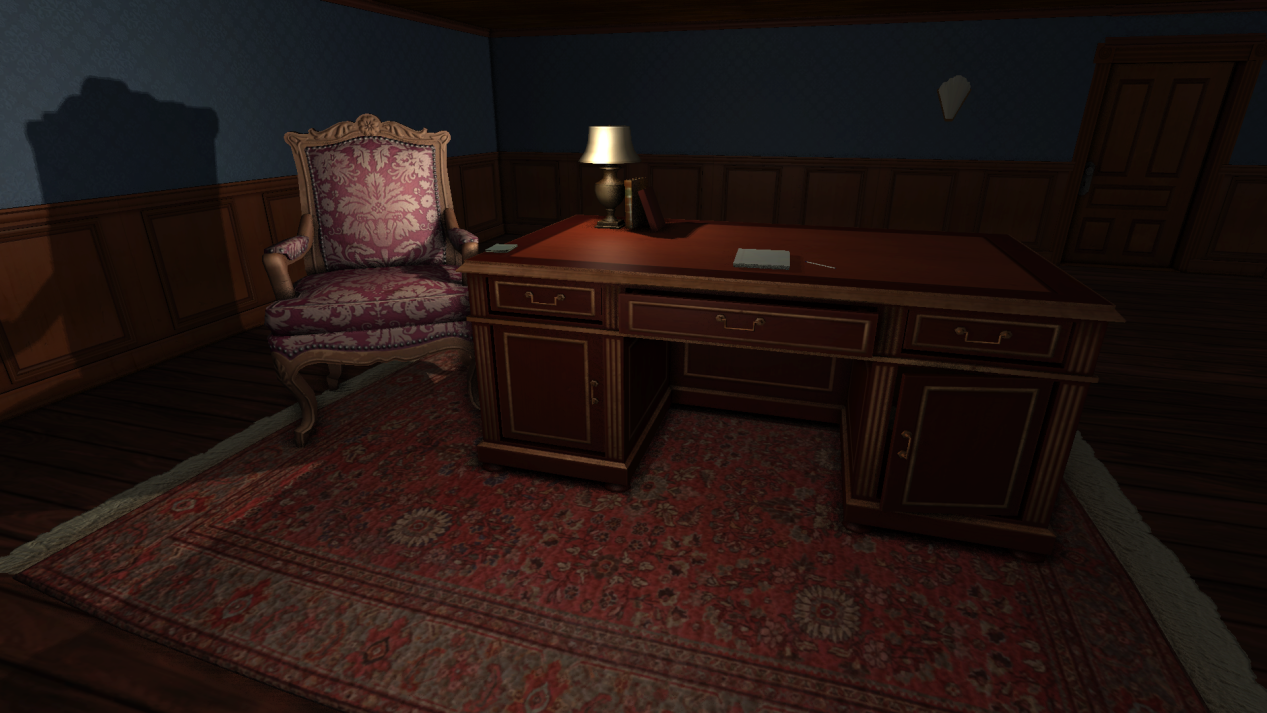
The pieces are darkish, severe, and dignified. Serviceable, slightly classical antiques that have been imperfectly but not poorly kept.

But the story of Gone Home centers around a family that moved into the house a hundred years after it was built, and they brought with them some of the quintessential unloveable 80s-90s oak furnishings that many of us recognize from our parents’ houses.
Getting these things right requires reference. The antiques are a little easier, since everyone loves a good antique. But with more recent, less tasteful items, Google image searching can only go so far. So I trawled eBay for an important artifact: a 1990 Sears Home Catalog.
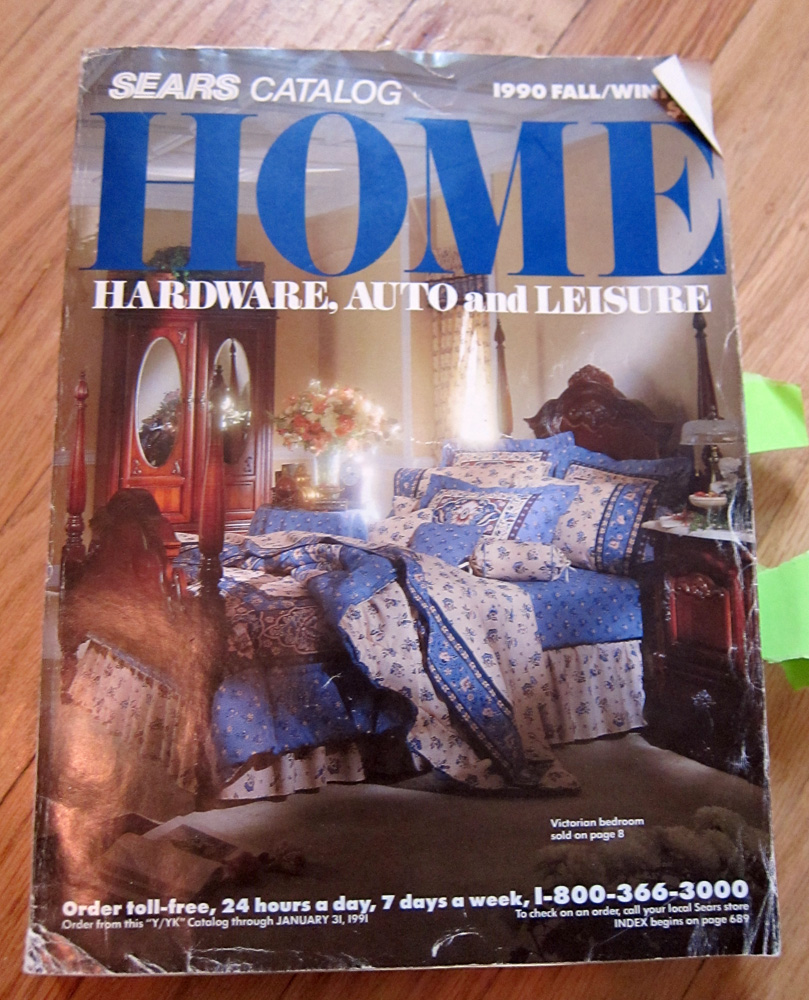
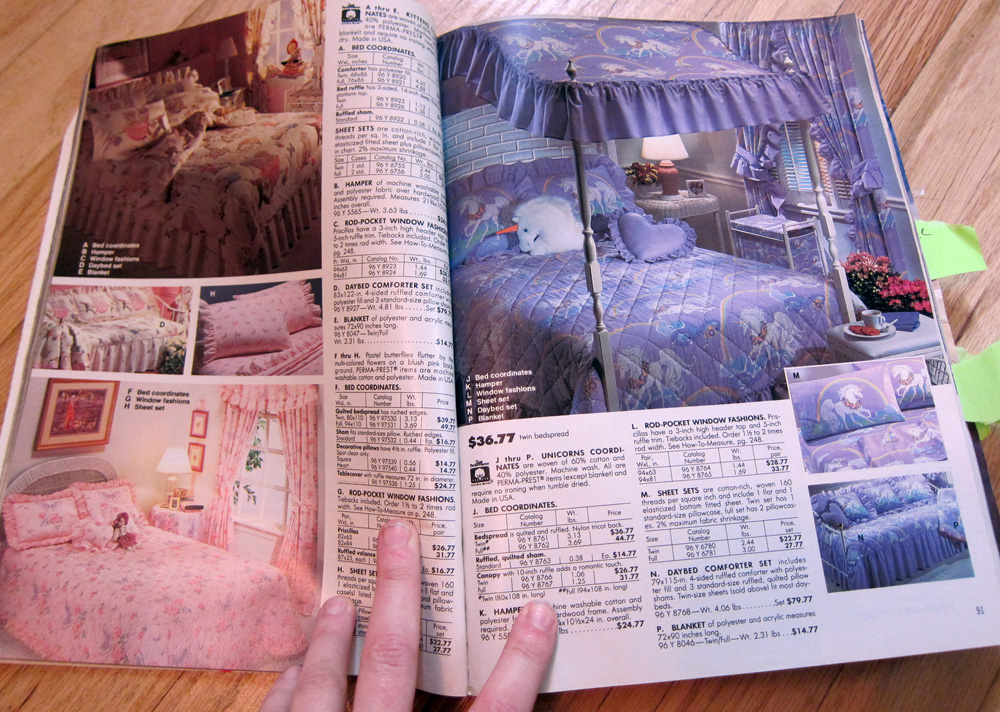
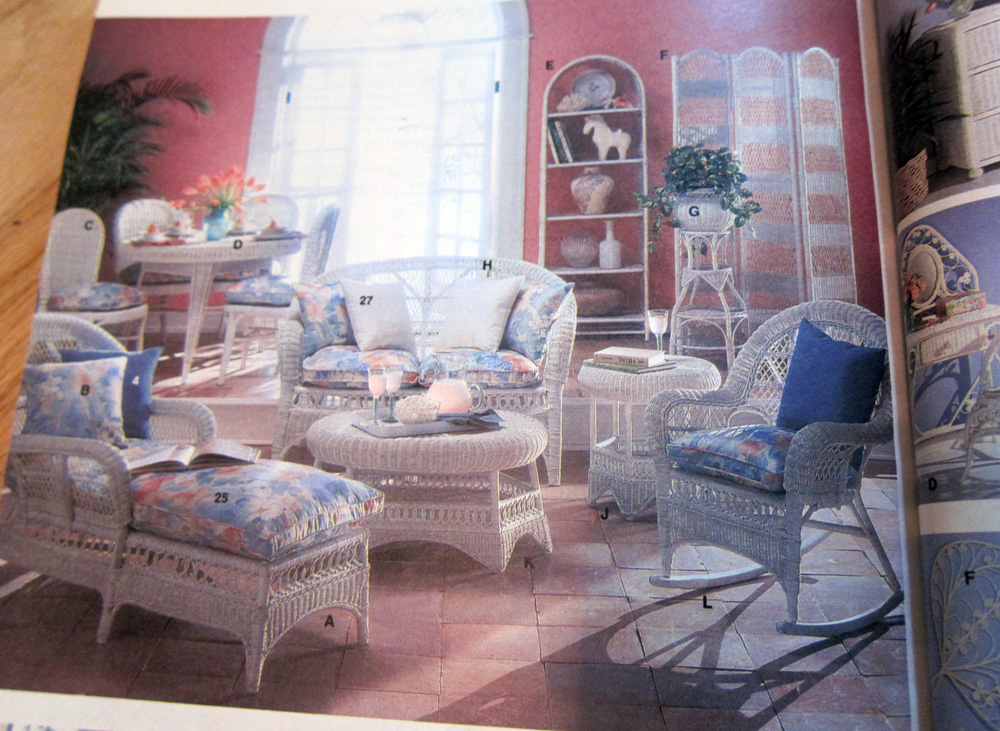
Not too expensive, and a timestamped treasure trove of any household item we could want to make. There’s some amazing stuff in here, because the 80s and 90s were a real winner of a time period as regards decor. Behold:
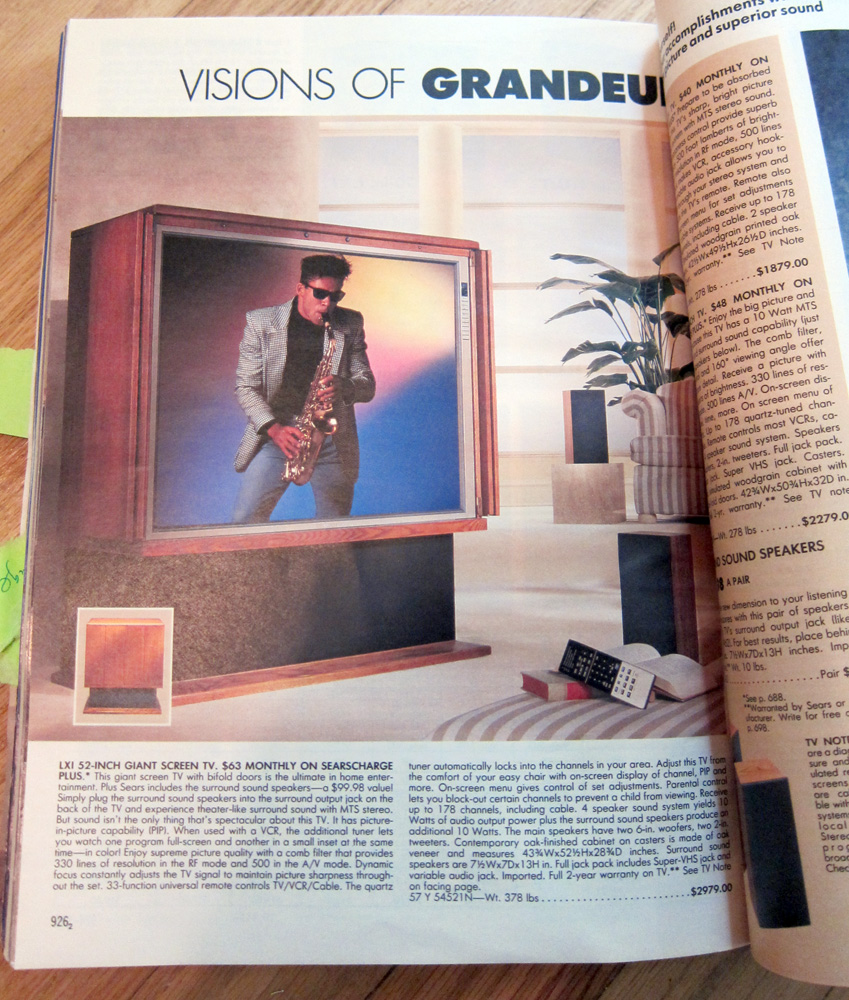
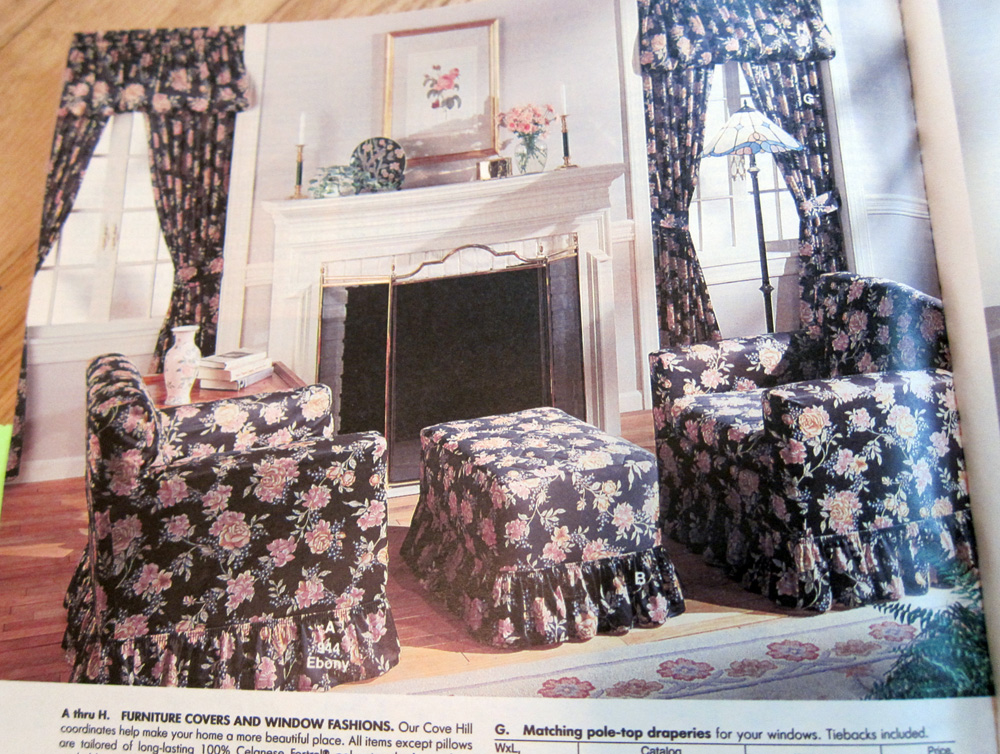


These furnishings are not going in our game, because they are silly.

But there are piles of stuff in there that we can actually use! Like this little coffee table:
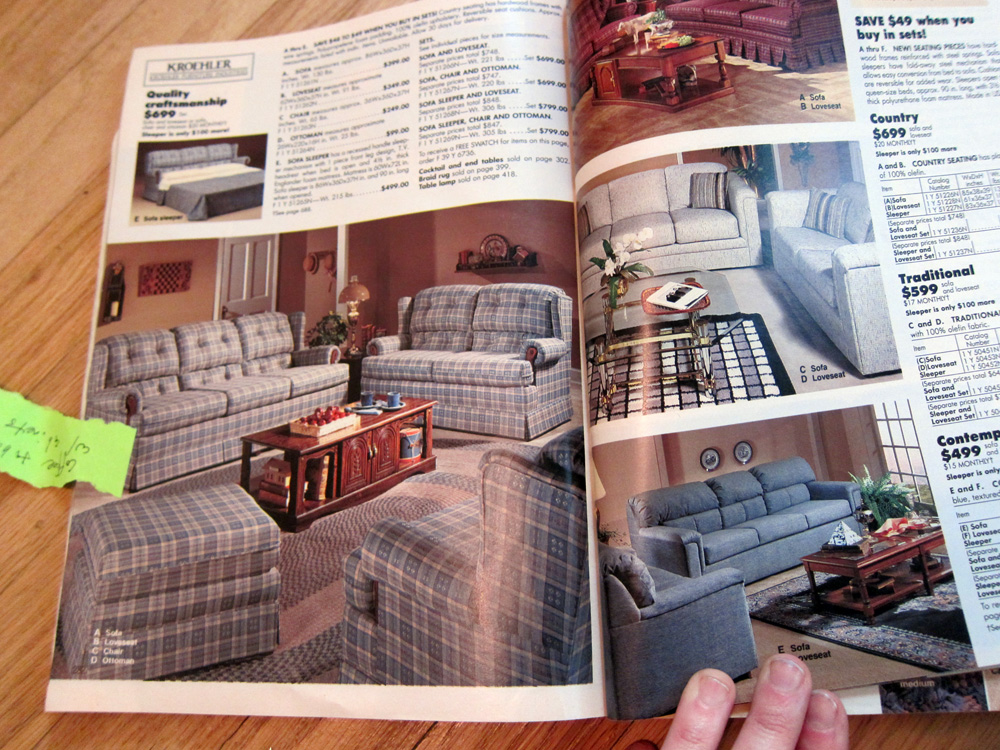
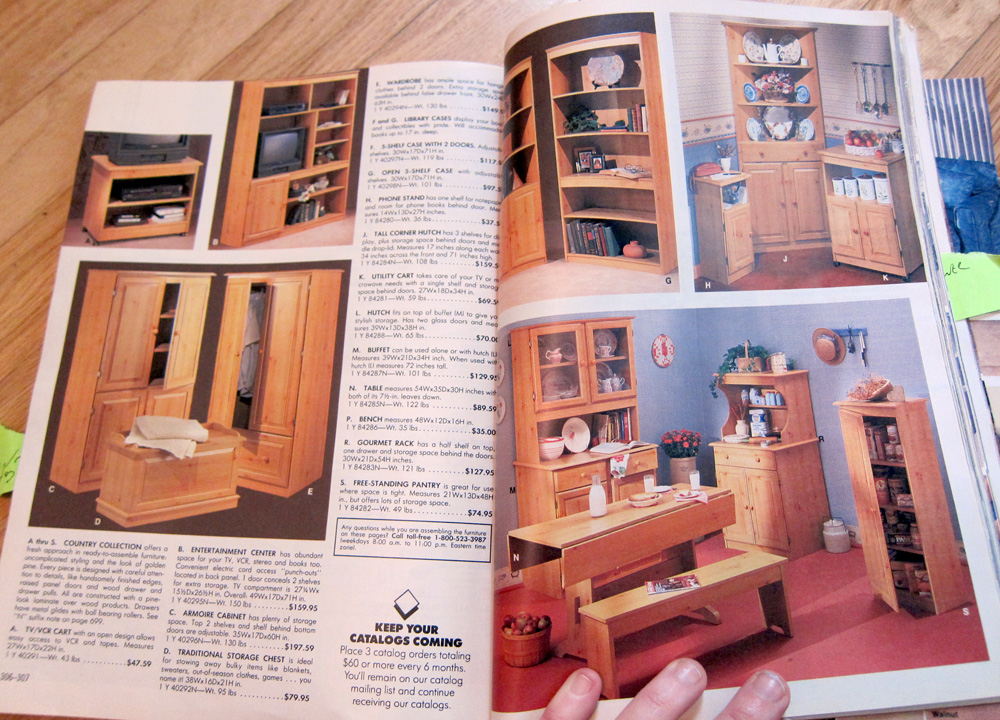
 and this chest of drawers:


We gave these as reference to our environment modeler, Kate Craig, along with a few changes we needed to keep the piece in line with our already-existing furniture. We wanted to keep it all looking cohesive, as if it could fit together into one big horrible faux-country 90s living room.

Here’s what she came up with, lit and arranged, with a little bit of added clutter to liven it up.
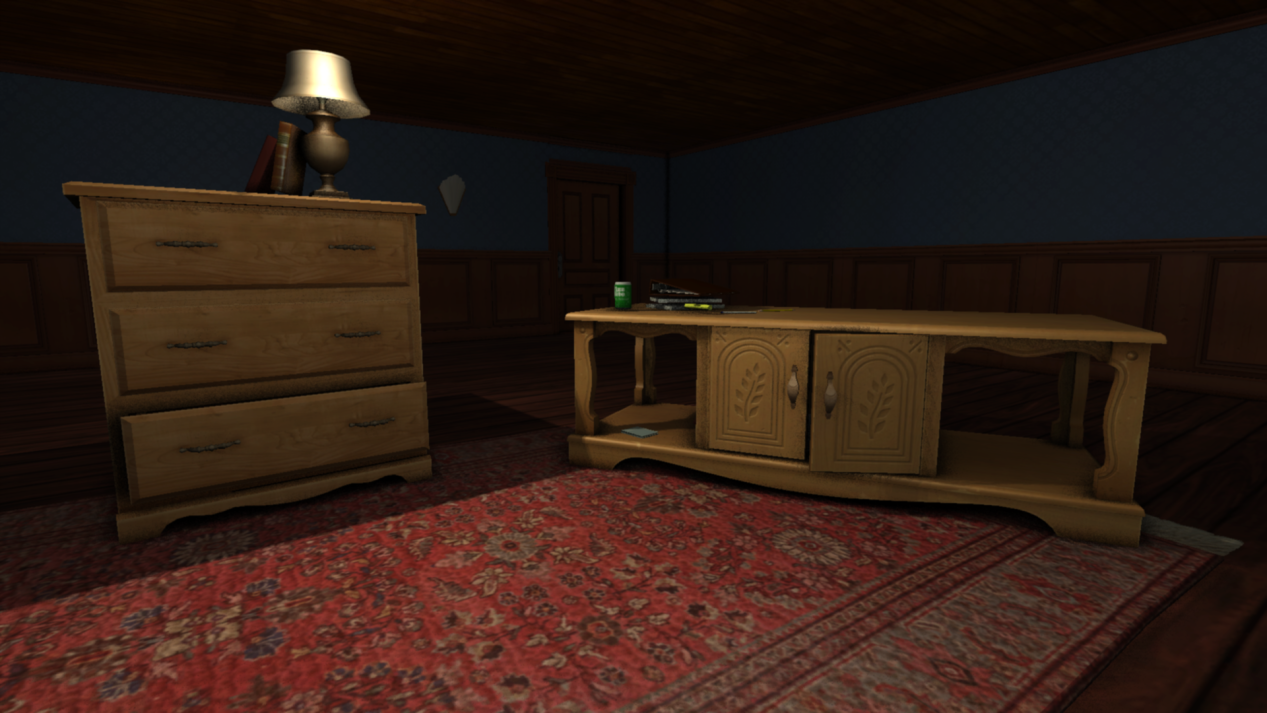

And finally, here are the two styles, uneasily but naturally coexisting.
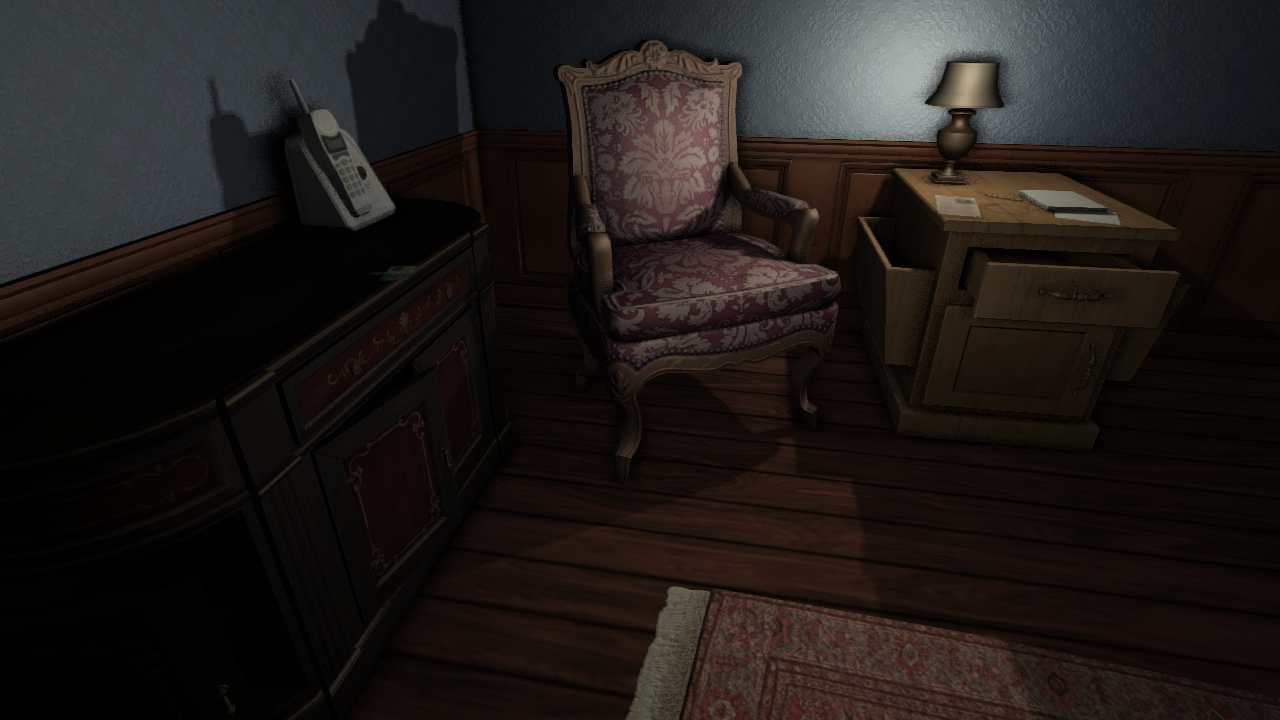

Our intent is for all aspects of Gone Home to mesh together and support one another. Here, our visuals reinforce the concept of different generations uncomfortably occupying the same space — a theme which is also woven through the story and setting.

Posted in Art, Media | 2 Comments

Oh, Right: Also, we’ve got a game

Last week we announced the existence of The Fullbright Company, simply as an organization: who we are and why we started this enterprise. We’ve been blown away by the outpouring of support and interest from gamers, journalists and other developers. It’s been a good week.

But we’ve only talked about the company thus far, when what we really want to show people is the game we’ve been working on for the last few months. So today we’re going to do a little of that.

We’re calling it Gone Home, and it’s in an early pre-alpha (very unfinished) state.

Here are a few in-game screens:


An in-editor screenshot of the space we’ve built out so far:

Click to enlarge

And here’s some work-in-progress video captured from early in the game, demonstrating our core exploration and investigation mechanics:

Error
This video doesn’t exist

Also available on YouTube

Hopefully the video demonstrates the basics of what Gone Home is all about: exploring a modern, residential locale, and discovering the story of what happened there by investigating a deeply interactive gameworld. We’re really interested in pushing toward simulation, both in the sense of the physics system but also in allowing the player to open any door or drawer they’d logically be able to and examine what’s inside, down to small details. If we do it right, these interactive and simulation elements will work together to make you that much more invested in discovering the story woven into the environment.

To answer some questions about what we’re showing:

  • How much game do you actually have? Currently we’re concentrating on the first half of the game, to build out and learn from before moving ahead. Our core gameplay and UI features are in. The playable space and critical path and story elements for the first half of the game are in. About 5% of the art and sound are in. But we can play through a representative, lower fidelity segment of the game and see if we’re on the right track. And so far, we’re excited by what we’ve got.
  • Are you using a gamepad in the video? Yes, for video capture purposes. Gone Home is PC native with mouse-and-keyboard as the default, but gamepad will also be supported.
  • What engine are you using? We are using Unity.
  • Are you planning to do a Kickstarter? No, we are not.
  • Where does Gone Home take place? WHEN does it take place? I thought I noticed… We’ll be showing more about the specifics of the game’s setting and other details in the coming months.

So what’s next? This is the biggest chunk of Gone Home that we’re going to show until we do a full trailer and reveal, probably later this year. But in the meantime we’ll be showing bits and pieces in blogposts here to demonstrate our process and our progress: how we’re developing the story and tone and detailing out the playable space; how Johnnemann is coding all sorts of functionality in Unity; how Karla is developing the visual look, and working with talented friends of ours to bring in music, sound and environment art.

Thanks for checking out what we’ve got so far. We can’t wait to show you more of Gone Home!

Posted in Media | 32 Comments

Intent

Hi there. I’m Steve. I wanted to tell you about this company I’m a part of.

It’s a new video game studio, founded by me, Johnnemann Nordhagen, and Karla Zimonja. We all worked together for years, then parted ways for a while, and now we’re back together, starting up our own thing in beautiful Portland, Oregon.

So why did we decide to start The Fullbright Company?

We spent a lot of time working on games that were incredibly inspiring to be part of: games in the BioShock series, that do such an amazing job of balancing story and atmosphere with player-driven exploration. And we got a chance to tell a story of our own in the world of Rapture when we collaborated closely on Minerva’s Den, work we’re very proud of.

And basically, in our time apart after that project, we missed it. We missed working on a small team, on a small project, focused on telling a personal story in a player-driven way. We wanted to do that again. It was fun last time.

So we bailed out of corporate game development and reformed as an indie team, to see what we can do on our own. Well, ‘on our own’ is a big exaggeration. We’ll need lots of help from our talented friends who make amazing music and sound, and from environment artists who want to get involved in making our gameworld look mysterious and atmospheric and alive.

But regardless of the means, our intent in the end is simply to make a great game. A memorable experience that you’ll be drawn into, and keep thinking about after the game’s turned off, and want to come back to again someday. An experience that gets away from the constraints of ossified game genres, while relying on what we’re good at as a team:  creating immersive places to inhabit, and a deep, personal story to explore at your own pace. A nonviolent game in an unfantastical locale; an experience that not many games provide, built out of techniques that only video games can employ.

There’s a long journey ahead of us, and we intend to share as much of it with you as we can. For now though, we’re just glad to have you along for the ride.

Watch this space. There’ll be more soon.

Posted in Announcements | 25 Comments